
Tips for the Artist in Limbo: Entry Nine
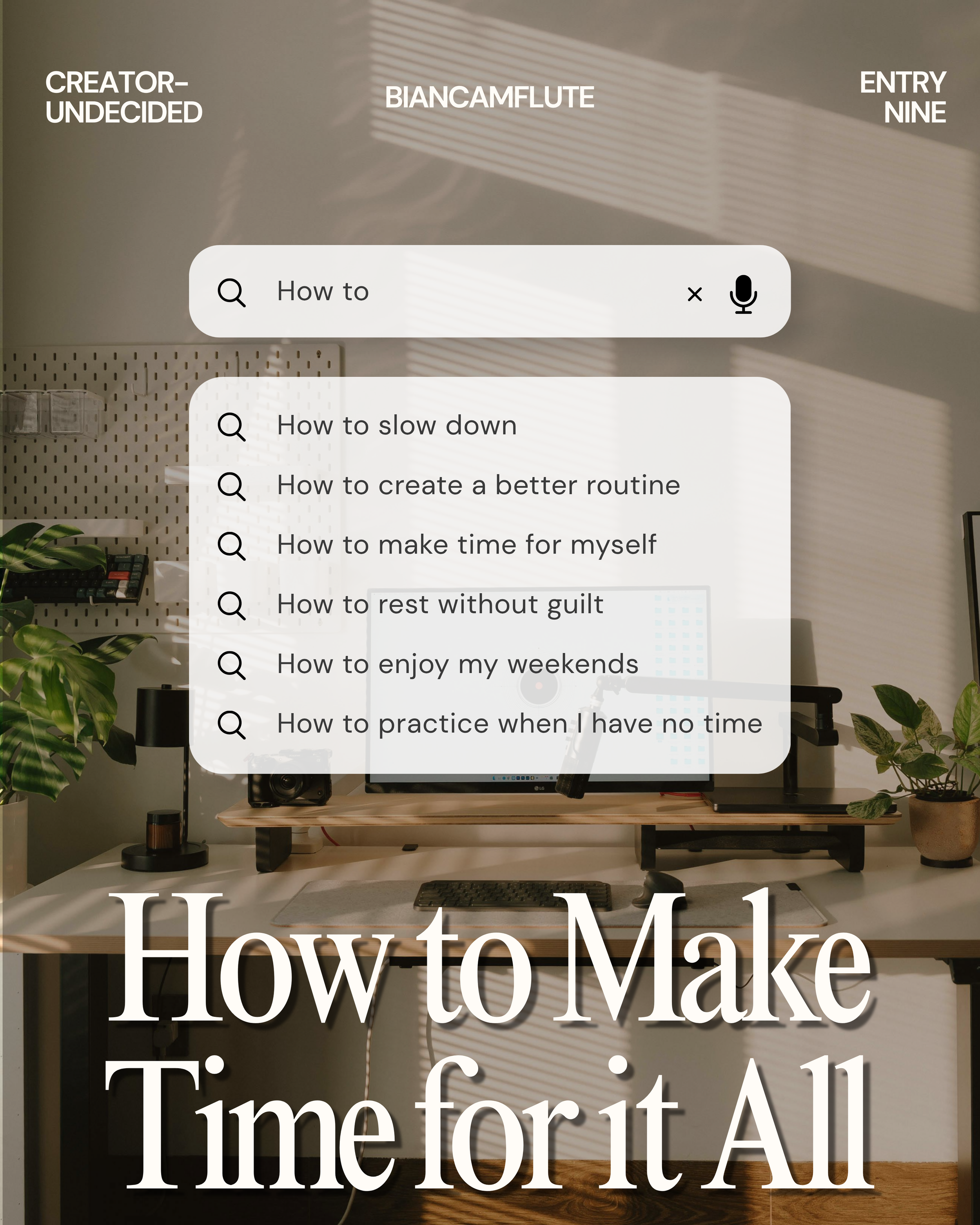
How to Make Time for it All
Coming off what felt like the longest and snowiest winter I’ve seen in NYC in years, I can’t put into words just how ecstatic I am that we’ve made it to the other side and are finally enjoying the warm weather and longer days.
Even though I’ve been out of school for four years now, the summer months still feel slightly separated from the rest of the year, almost like I slip back into a “school’s out” mindset. With that shift comes a natural urge to reset - refresh my practice habits, set new goals, and map out summer projects.
As an out-of-school artist, and as I’ve mentioned before in previous entries, a lot of “adulting” in a creative field comes down to building your own structure and, more importantly, actually committing to it.
Easier said than done, I know. I’m not going to pretend that the answer is simply saying no to everything that pulls you away from your craft. I want to have a full, joyful summer just as much as anyone else. So instead, what I’d rather share is how I actually find ways to make space for both.
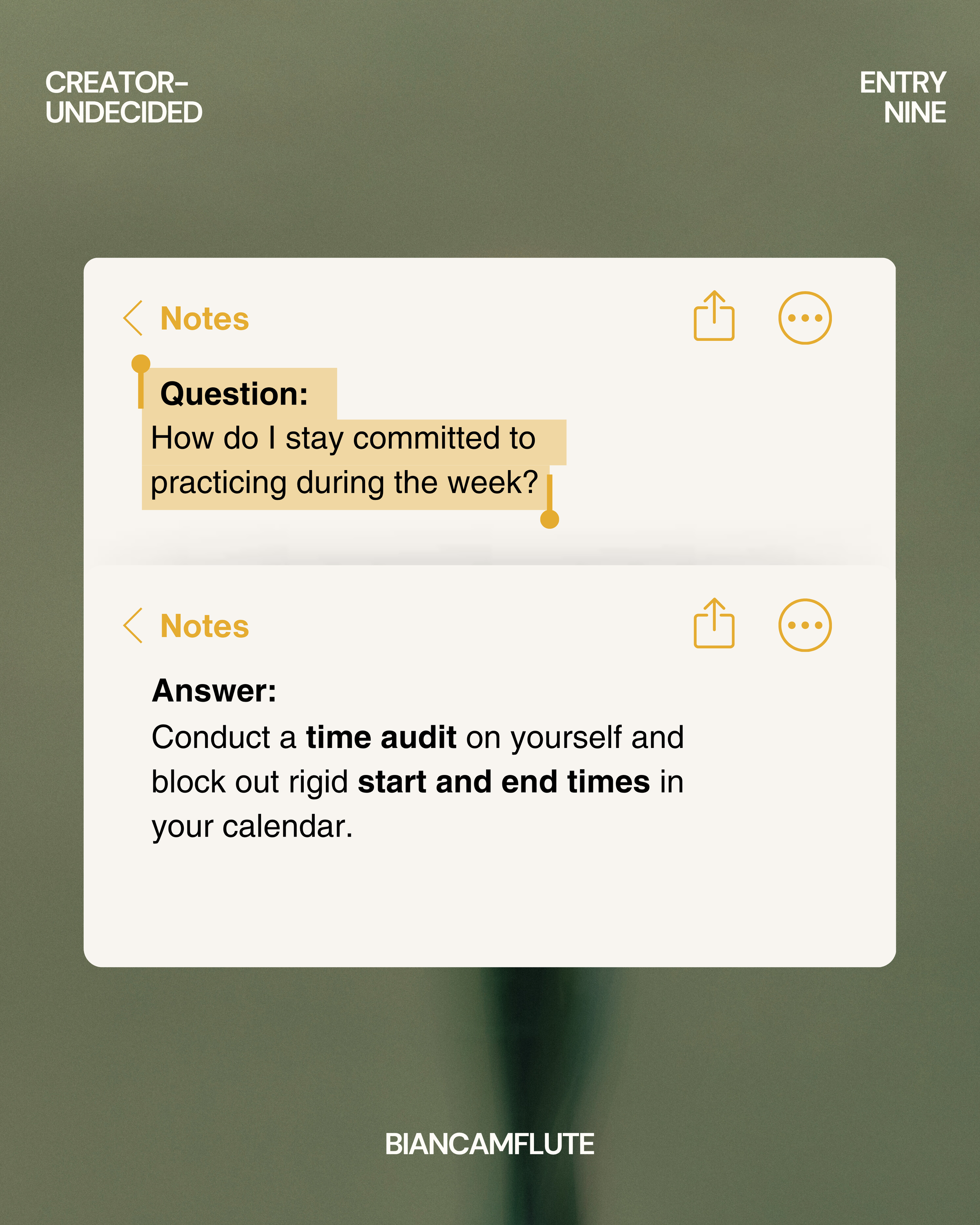
The first tip might feel a bit obvious - and it kind of is. If you’re not already using a calendar day to day, I need to know how you’re functioning, because I fully believe I would forget every responsibility I’ve ever had if it wasn’t all logged in my Google calendar.
In the past, I would jump straight into building out detailed time blocks with clear start and end times, mapping out my entire day and assuming that alone would completely fix my productivity. What I learned, though, is that those kinds of boundaries don’t really work if you don’t actually understand how you naturally move through your day. Without that, it’s really easy to fall off schedule - and then end up frustrated because, in theory, this was supposed to work…right?
I get it, which is why I suggest starting with what I’d call a time audit. Essentially, take 1-2 days and track what you’re actually doing each hour instead of telling yourself what you should be doing. I fin this quickly reveals all the little time gaps you don’t normally account for - things like commute time between places, or that brief mental reset you need when you get home from work before shifting into the next task. There are so many natural parts of the day that need to be built into your structure, not ignored by it.
It also gives you a much clearer picture of where your time is actually going. You start to notice patterns (when you’re most likely to drift off schedule, what situations throw you off) and from there you can make more realistic adjustments or build your plan around those tendencies instead of fighting against them.
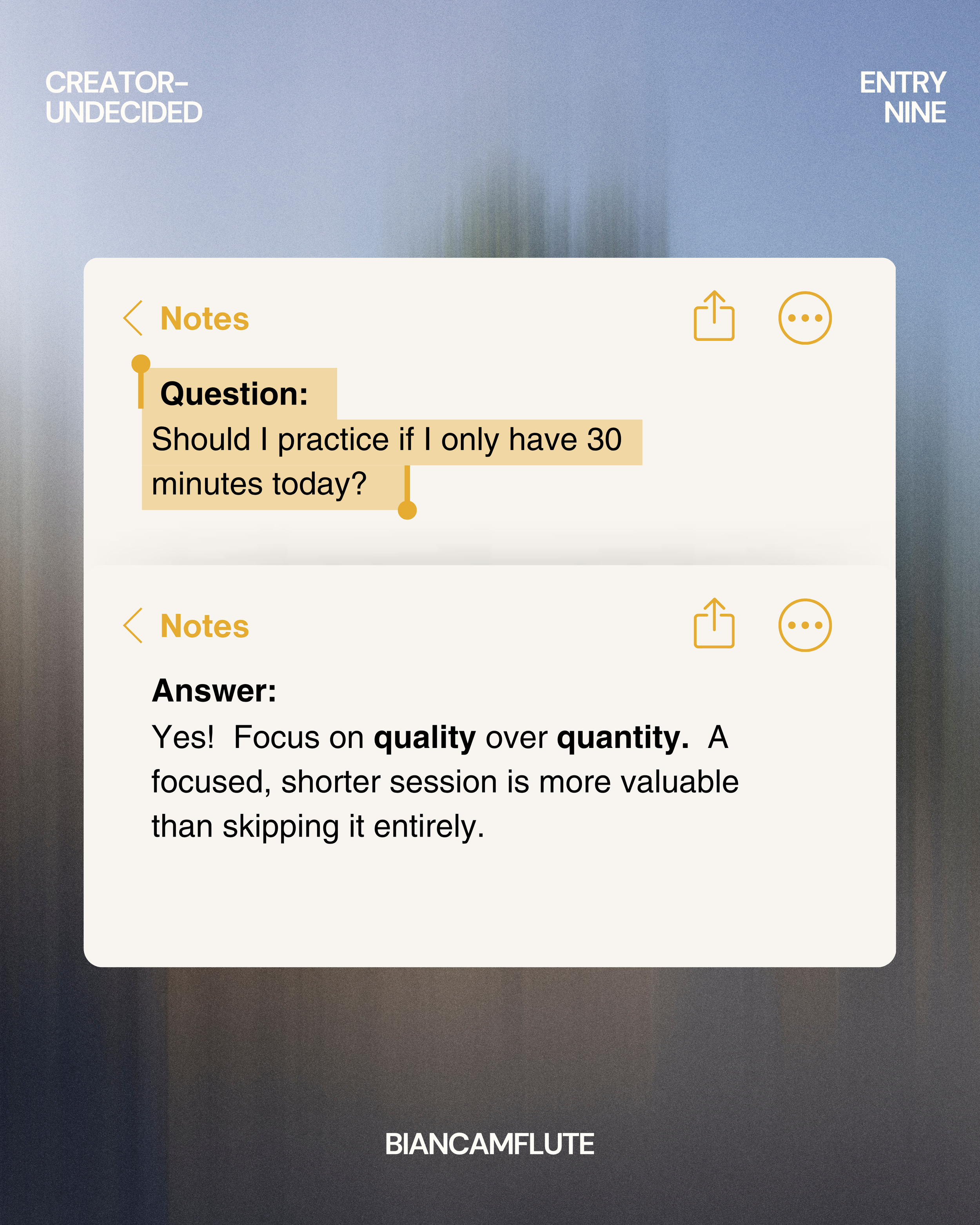
I know you’ve all heard this before: Quality over Quantity! It’s true every single time. That doesn’t just apply when you have a full 1-2 hours to practice - it matters even more on the days when time is limited.
And if you are a musician like me, you’ve probably also had a teacher remind you that practicing something will always be better than practicing nothing at all. I still have these moments more often than I’d like to admit. Our schedules get packed, and it can start to feel pointless to begin a focused practice session if you know the time is going to be cut short.
But the truth is, the time spent debating whether it’s “worth it” could already be used to warm up, run something slowly, or get through an entire page of music. Thirty minutes, fifteen minutes, even ten minutes is still more time than our fast-moving brains tend to give it credit for. And at the end of the day, having done even a small, intentional session is always going to outweigh skipping it altogether.
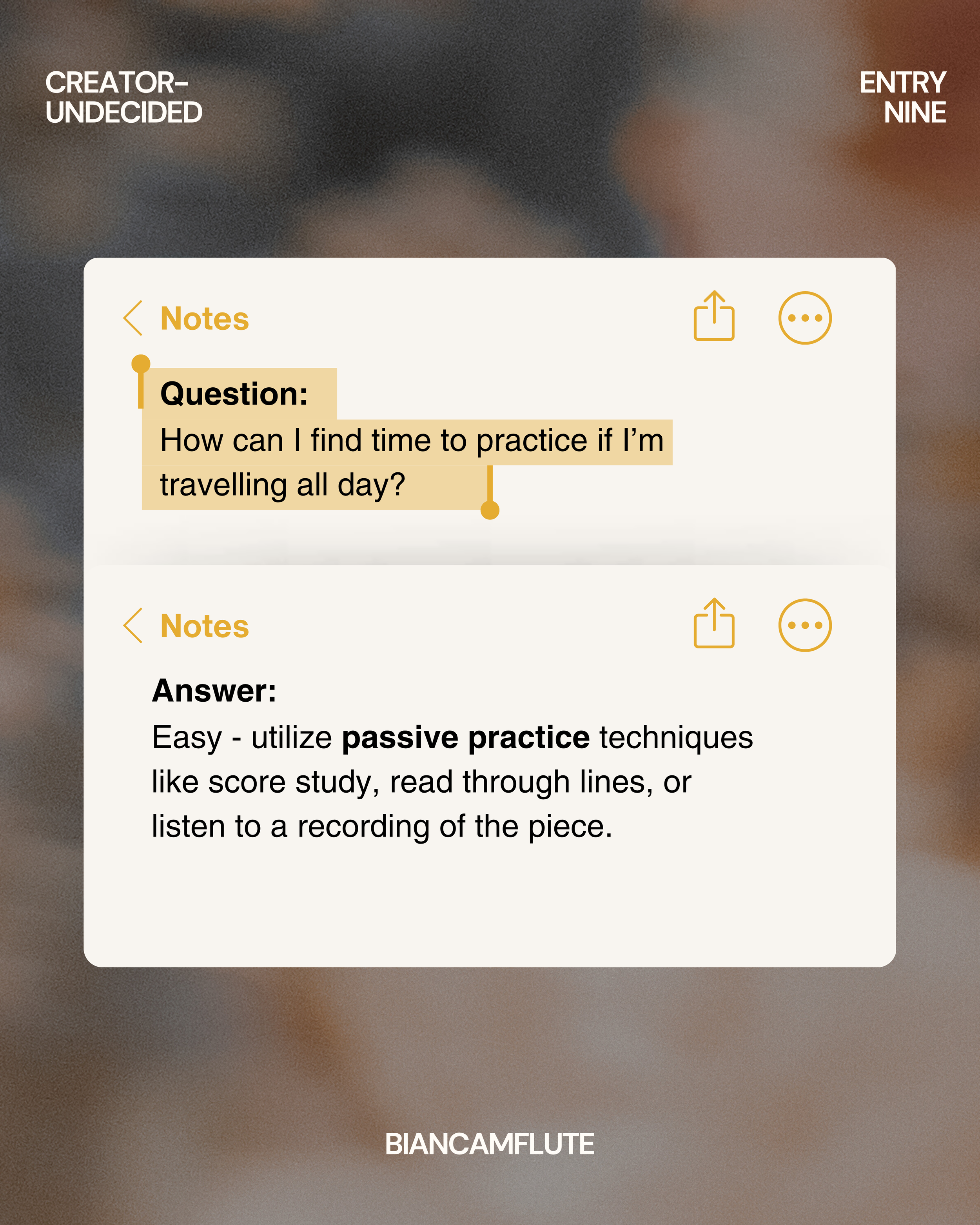
Summer is absolutely one of the best times of the year to plan a trip. I’ve definitely felt some guilt around the fact that I either A) might not have time to practice while I’m away, or B) don’t feel fully comfortable traveling with my instrument - especially when flying long distances. There’s just something about the risk of it getting lost or damaged that makes it hard to justify the stress sometimes.
So I’ve had to accept that there will be stretches of time where I’m not practicing in the usual, full-on way. But that doesn’t mean everything falls apart if you’re without your instrument, your rehearsal setup, or even your art materials.
As a musician, there are a number of passive practice techniques I’ve learned to rely on. Listening to recordings of the piece I’m working on, or spending time with the score away from my instrument, can be just as valuable as physically playing through it. In fact, you often gain an even clearer sense of context when you’re hearing the full work while also studying your own part within it.
That kind of listening can reveal things you might miss when you’re focused on the mechanics of playing. And the best part is, these are things you can do anywhere (on a commute, in an airport, or while traveling to your destination) so you’re still staying connected to your work, even when you’re away from it.
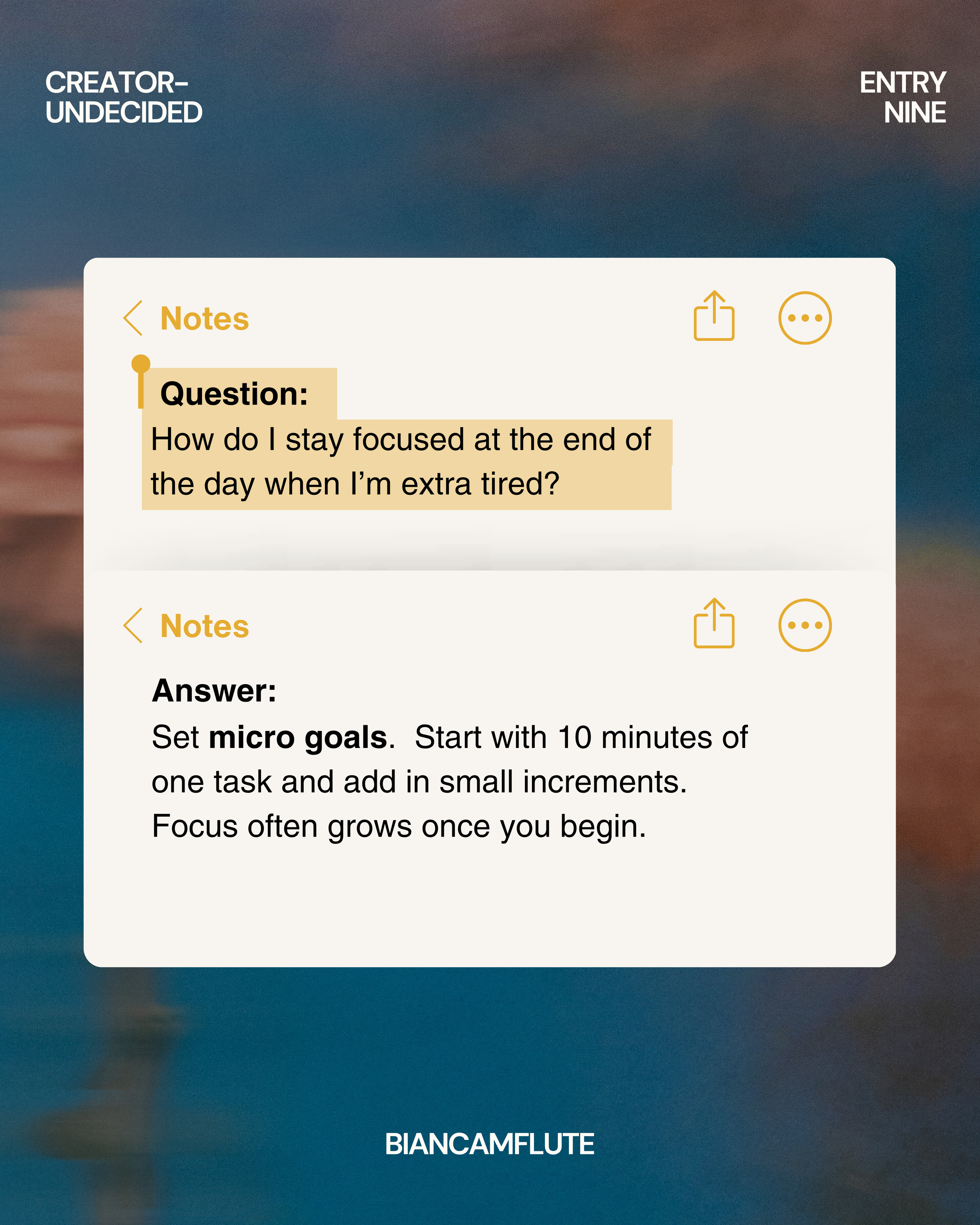
This slide is basically the story of my life. If you follow me on social media, you might already know how much I struggle with finding both the mental and physical energy to practice after working a 9-to-5 all day. Every day looks a little different, and depending on what else I have going on, I can feel slightly off in terms of sleep, focus, or overall mental bandwidth. Sometimes it’s not even physical fatigue - it’s just that my motivation gets completely overpowered by the urge to “rot” on my phone and scroll for way longer than I intend to.
The truth is, there’s no such thing as a perfectly productive day happening every day. But for the most part, I’ve found that starting with micro-goals helps ease the pressure of committing to a full hour (or more) of focused practice after an 8-hour workday. Tying this back to what I mentioned earlier about quality over quantity - if I only end up practicing for 10 minutes because I realize I genuinely need to prioritize rest that day, then that still counts. Something is always better than nothing.
That said, more often than not, once I actually start practicing, I get a second wind. I end up tapping into this unexpected reserve of energy and focus that carries me through the rest of my session. The key through all of this mental gymnastics is just being honest with yourself about what you actually need in that moment, and adjusting accordingly.
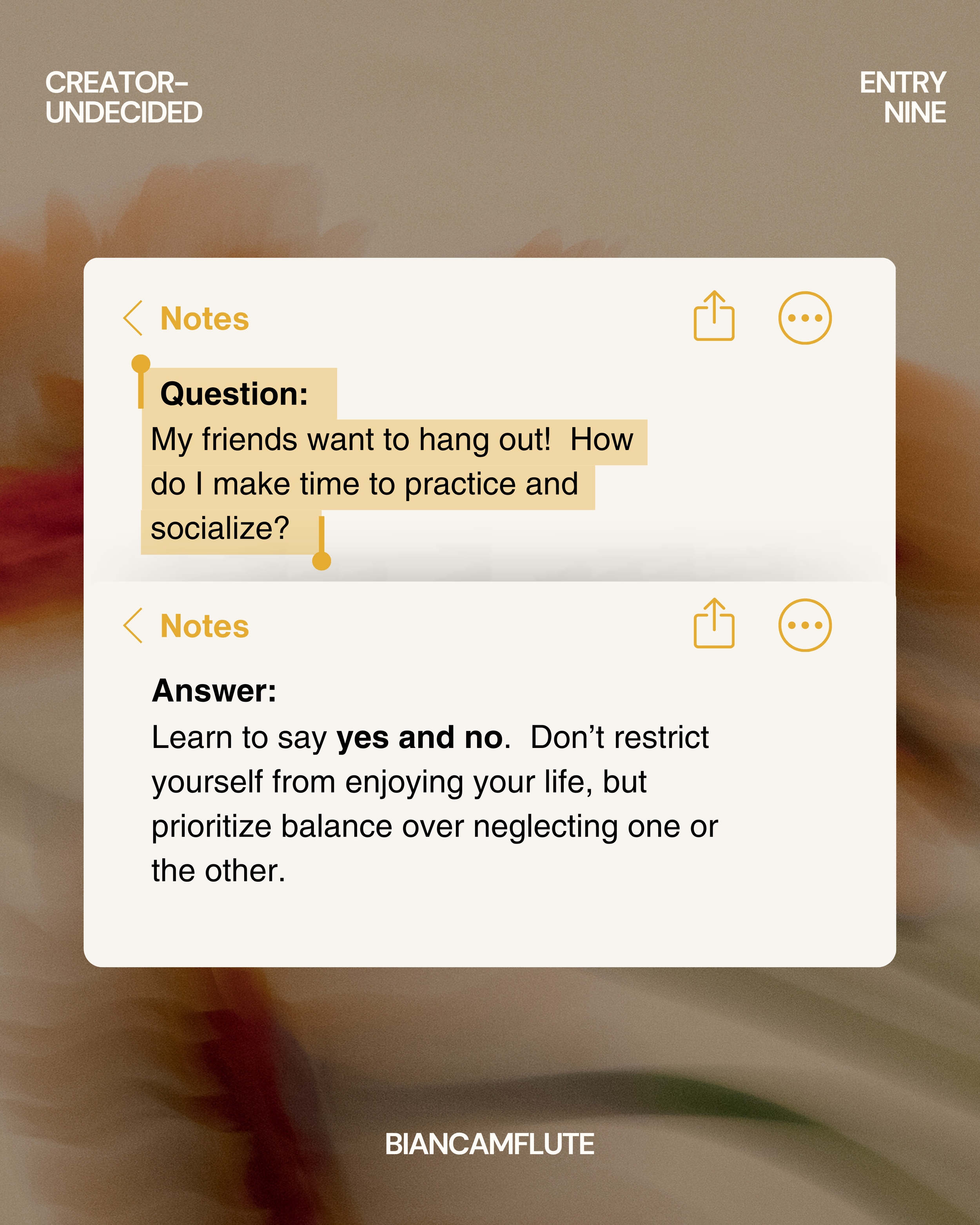
One of the best parts about summer, in my opinion, is the spontaneity that seems to take over the entire city (it must be something in the warm weather).
Structure is definitely key to success, but life is still going to happen. Things come up unexpectedly, and sometimes those things are actually really fun and exciting! I don’t want you to finish reading this thinking your summer has to be rigid or boring. Life really is about balance (I know, another cliché).
You have to develop the discipline to say both yes and no. Don’t get so tunnel-visioned that you forget to actually enjoy your life. If you’ve been consistent all week, then yes - go out, get drinks with a friend, take the night off when it feels right. But if you’ve already skipped practice multiple times that week, it might be worth saying no in that moment and staying committed, so you can reset and be more social the following week without the guilt.
I used to struggle with really bad FOMO, so I understand how easy it is to switch up plans at the last minute. But ultimately, those decisions come down to how seriously you’re taking your progress - and just as importantly, how intentionally you want to maintain balance in your life.
— Bianca