
Tips for the Artist in Limbo: Entry Eight

Four Ways to Turn Reflection Into Progress
My last entry focused entirely on building an intentional pre-performance ritual. Your “Pre-Game Ritual” is all about execution, but what happens immediately after the performance is where the real growth begins.
I want to open up the conversation around how you reflect on a performance - and not just in the surface level sense of saying, “It went well!” or “That was terrible.” While those reactions are are completely valid in the moment, once the adrenaline has worn off and you return to work, there is a great opportunity for you to dive deeper.
True reflection involves looking closely at how you executed under pressure, how you responded to the environment, and how external feedback can help to inform your next steps.
Here are four ways to level up your performance through thoughtful and intentional reflection:
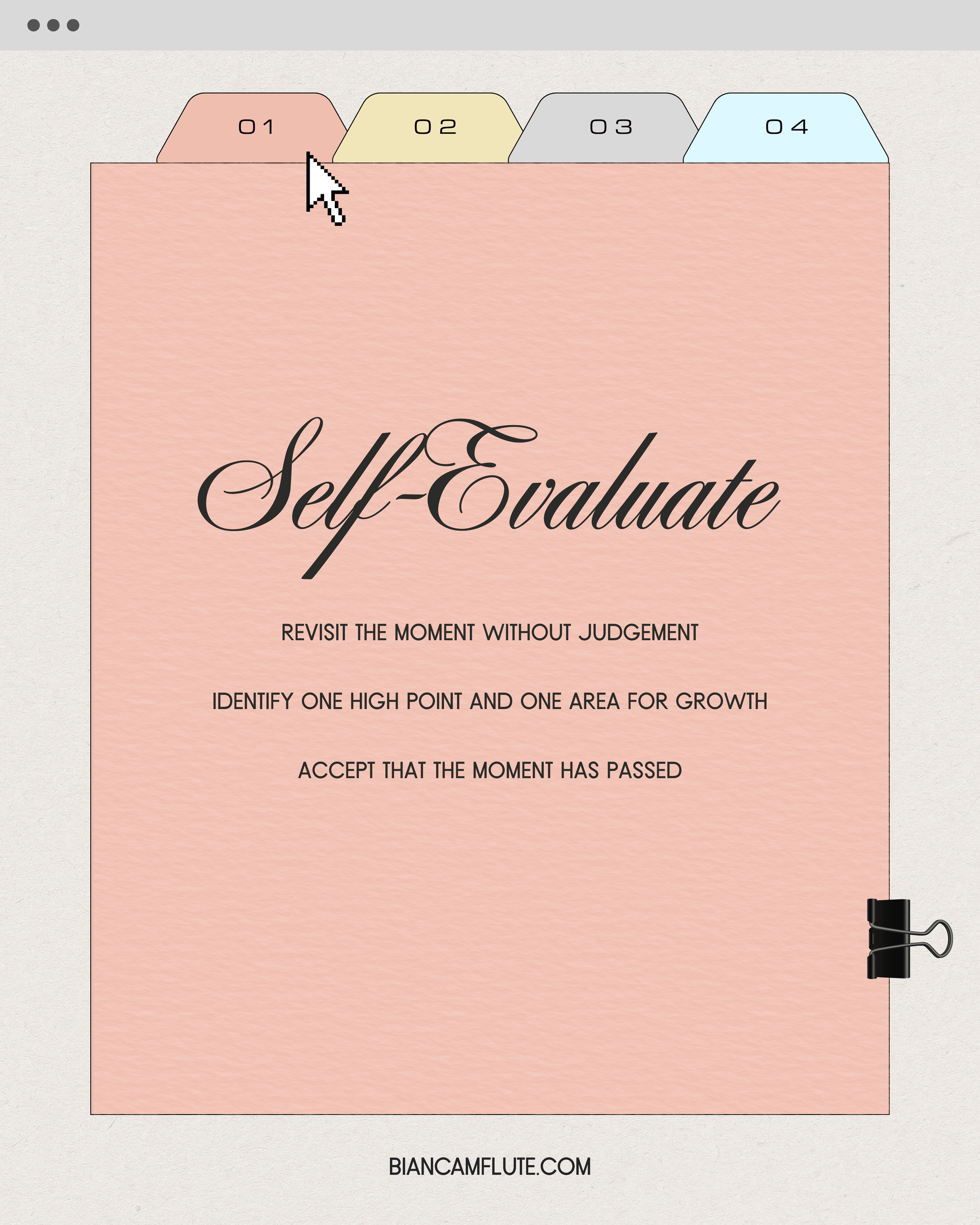
First comes the stage that is almost entirely driven by emotion - and that’s okay! I'm talking about the moment right when you step off the stage or out of the audition room, when your immediate reaction hits you. This response matters more than you might think, because it can shape how you interpret the entire experience later on.
I say, try not to be overly critical of yourself right away. At the end of the day, you just accomplished something significant, and it’s important to recognize that. Convincing yourself that you’ve completely failed the second you walk off stage isn’t really realistic or helpful.
Take 5 minutes to identify one moment you loved, and then one area where you feel you could have been stronger - highs vs. lows. When you are addressing the “low”, keep it factual rather than emotional. There’s truly no such thing as a perfect performance and, more often than not, your strong moments strongly outweigh any mistakes, especially from the listeners point of view.
An equally important step is accepting that the moment has passed. What’s done is done, and there’s no changing how things played out. Allow yourself to appreciate what you have accomplished. Remember that your motivation shouldn’t hinge on the outcome of an audition or a performance, but instead on how you choose to utilize the experience.
Focus on the controllable - how you adjust and go up from here.
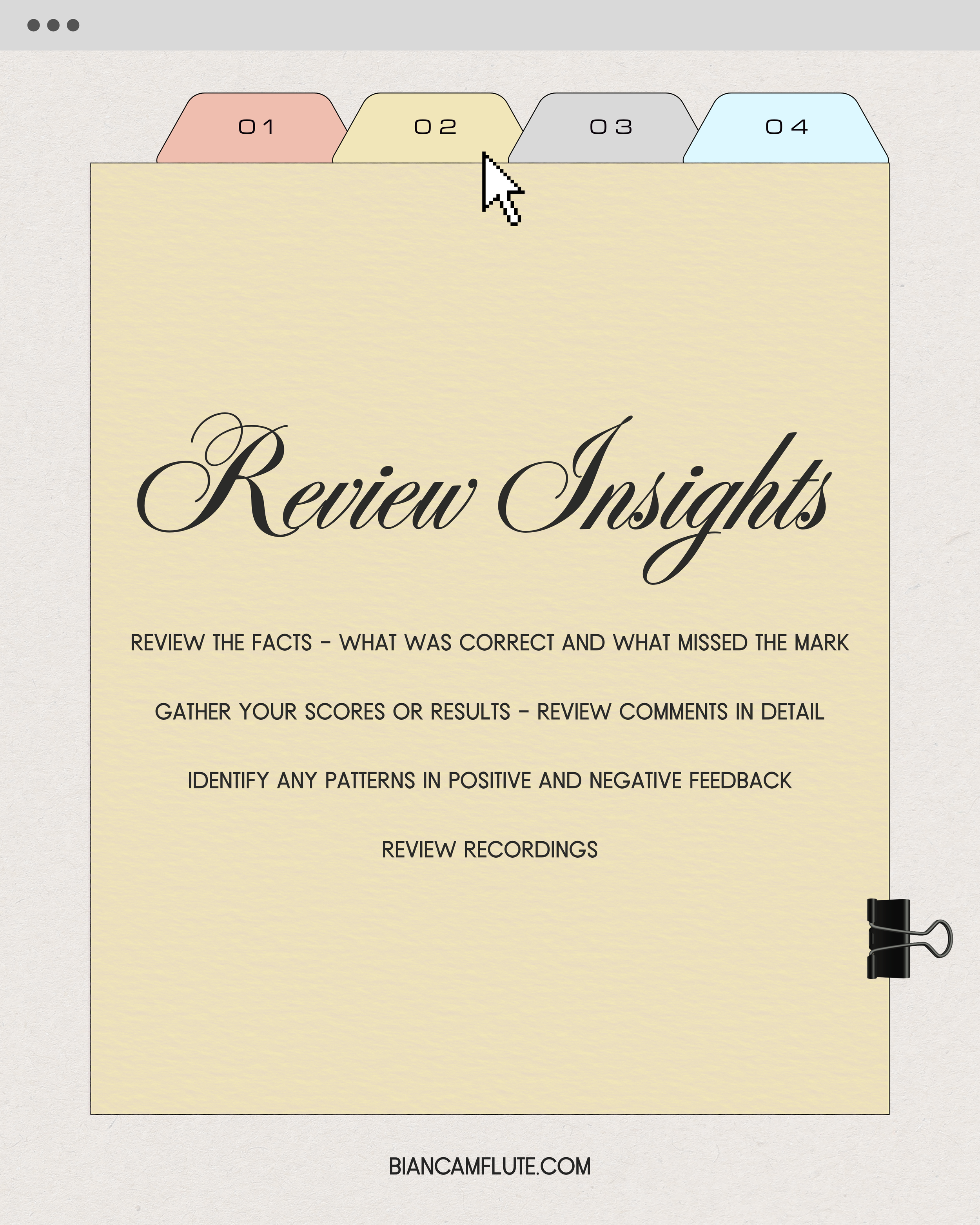
Let’s imagine you’ve return to the practice room and you are trying to figure out your next steps. This is when you can shift into a more objective mindset. Take the emotion out of it for a moment and review the facts.
What went well? What technically missed the mark?
I’ve talked about this before - separating your self-review into two categories: mental and physical. How did each part of you react under pressure? If you lacked a bit of confidence during the performance, it’s possible the mental side overpowered the physical, and nerves led to mistakes on stage. On the other hand, if you felt underprepared, that points to a physical gap specifically in preparation. Give yourself a grade for each category and, be honest. If numbers on a scale are what makes sense to you, give yourself a score out of 5 or 10. Or, simply give yourself a “pass” or “fail”. This may feel a bit over the top, but using a clear system like this helps keep your thoughts organized.
If this is a situation where you received feedback (like an audition) gather your scores and carefully review any comments. Identify any patterns in the feedback. Do you notice the same type of comment recurring? Highlight these as priority to focus on in your practice.
If you were able to record the performance, take detailed notes! The goal of this step is to make sense of the situation, clarify the results, and understand why things turned out the way they did. You’re essentially dissecting the performance to learn from it.
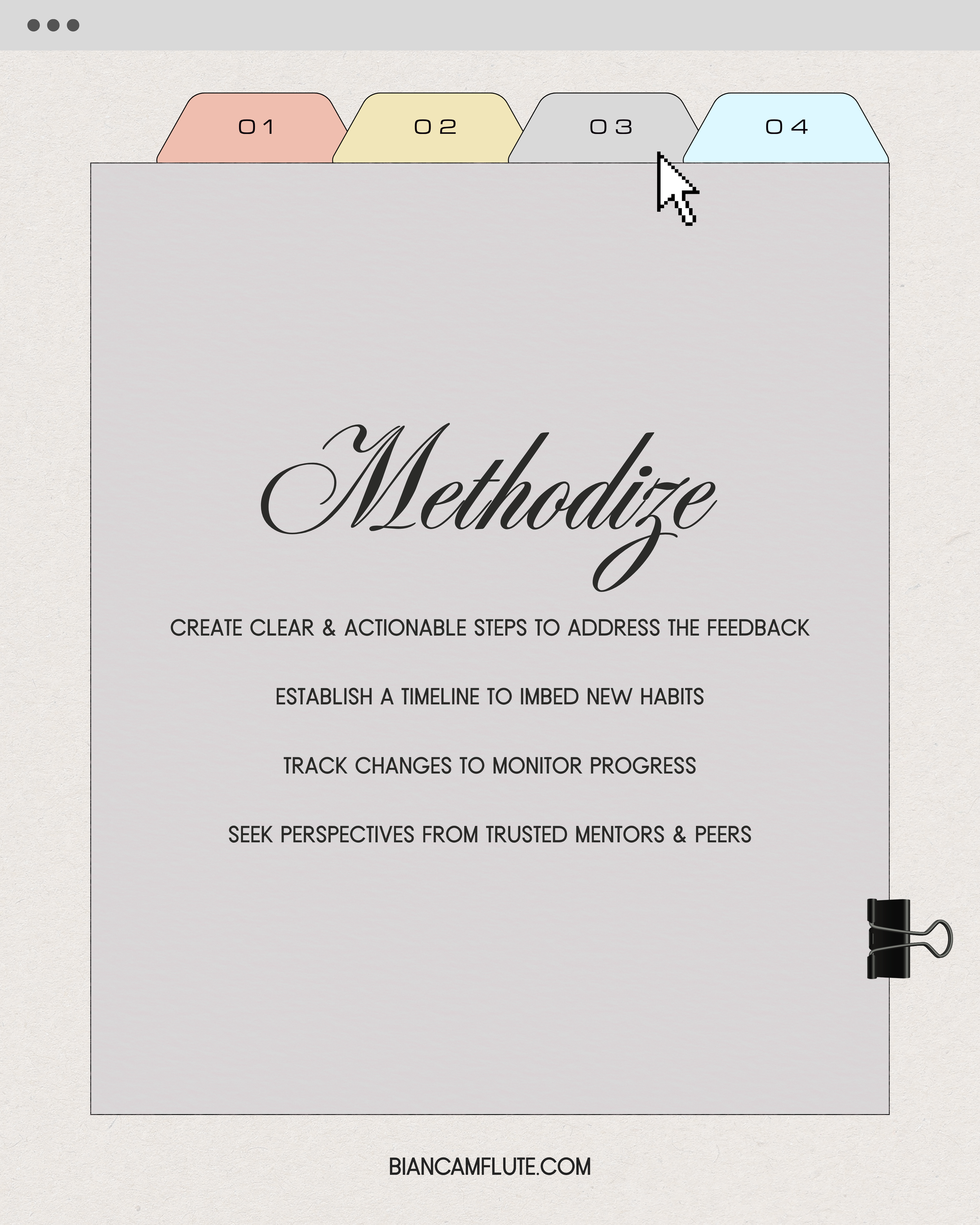
Now’s the time to turn results into action.
Take your analysis of the feedback (both positive and negative) and create clear, actionable steps to adopt into your practice routine. For the skills you’re already strong in, keep refining them to maintain that level of excellence. For the areas that missed the mark, give those techniques focused attention for a set, measurable period of time.
It’s important to track your progress! Keep a journal and consider asking for feedback from trusted mentors or peers to see if they notice positive change as well.
One common mistake I notice I make is summarizing on-stage mistakes as a signal that I just need to practice more. But that is a never ending cycle - you technically could always spend more time practicing, but that is not necessarily an effective or measurable approach. I’ve learned that a smarter strategy is to adjust how and where you practice. If most mistakes are mental, for example, create more mock performance situations: play for peers, perform for a mentor, or record your individual practice sessions. These targeted adjustments make your practice much more productive and results-driven.
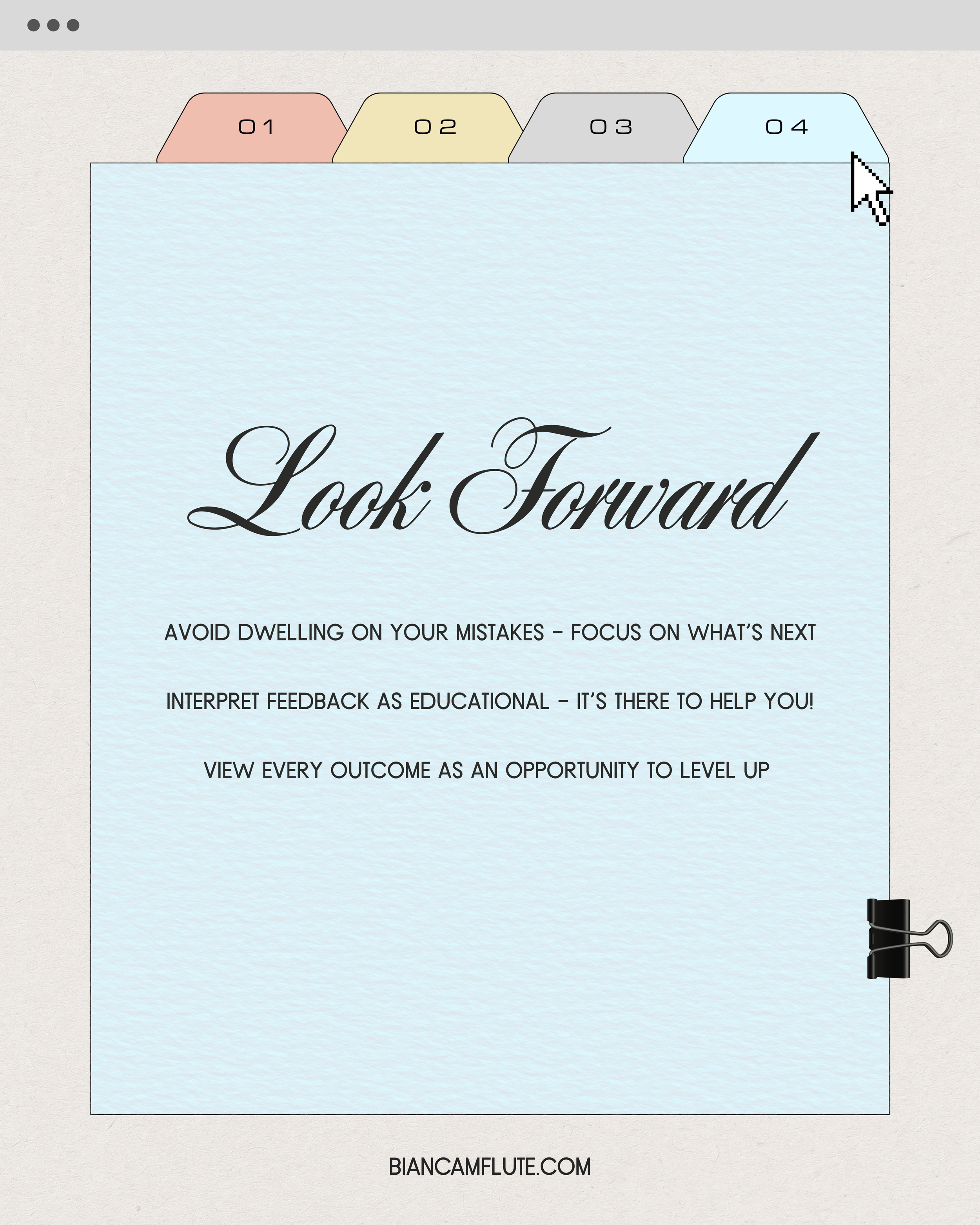
Every performance or audition is not just a one-off experience; it is a step in the right direction. The more experience you gain executing, the better you become. But growth also comes form how you interpret results and feedback.
It might feel a little like being back in school if you’re grading yourself or analyzing every detail of a performance. But if this is your craft, it’s most helpful to not dismiss a performance as “just another day on the job.” Being a creative means using every moment as a learning opportunity - a chance to level up. The time you spend reflecting is there to ensure you grow intentionally and avoid repeating the same patterns.