

How to Mix a Little Whimsy into Your Routine
by Bianca Morris
Let’s face it, we’ve been at this for a long time, right? And in any other stale moment in life, we would be begging to shake things up a little. So, why is practicing something that has to be so serious all of the time? Don’t get me wrong, there are moments when you need to be zeroed in and don’t necessarily have time to deter from your routine. But, for those periods throughout the year when things may be a little slow or even a little stressful, it can become hard to stay motivated or, more importantly, remain excited or inspired by the thought of practicing your craft.
Maybe it’s time for you to devote some energy to ensuring that you leave your practice sessions feeling energized instead of drained. It doesn’t have to only be about checking items off of a to-do list: fix this passage, repeat this drill, correct this mistake, etc.
Playfulness doesn’t replace serious work, it can really enhance it and often leads to better results. Here are 5 ways that I like to add whimsy to my practice.
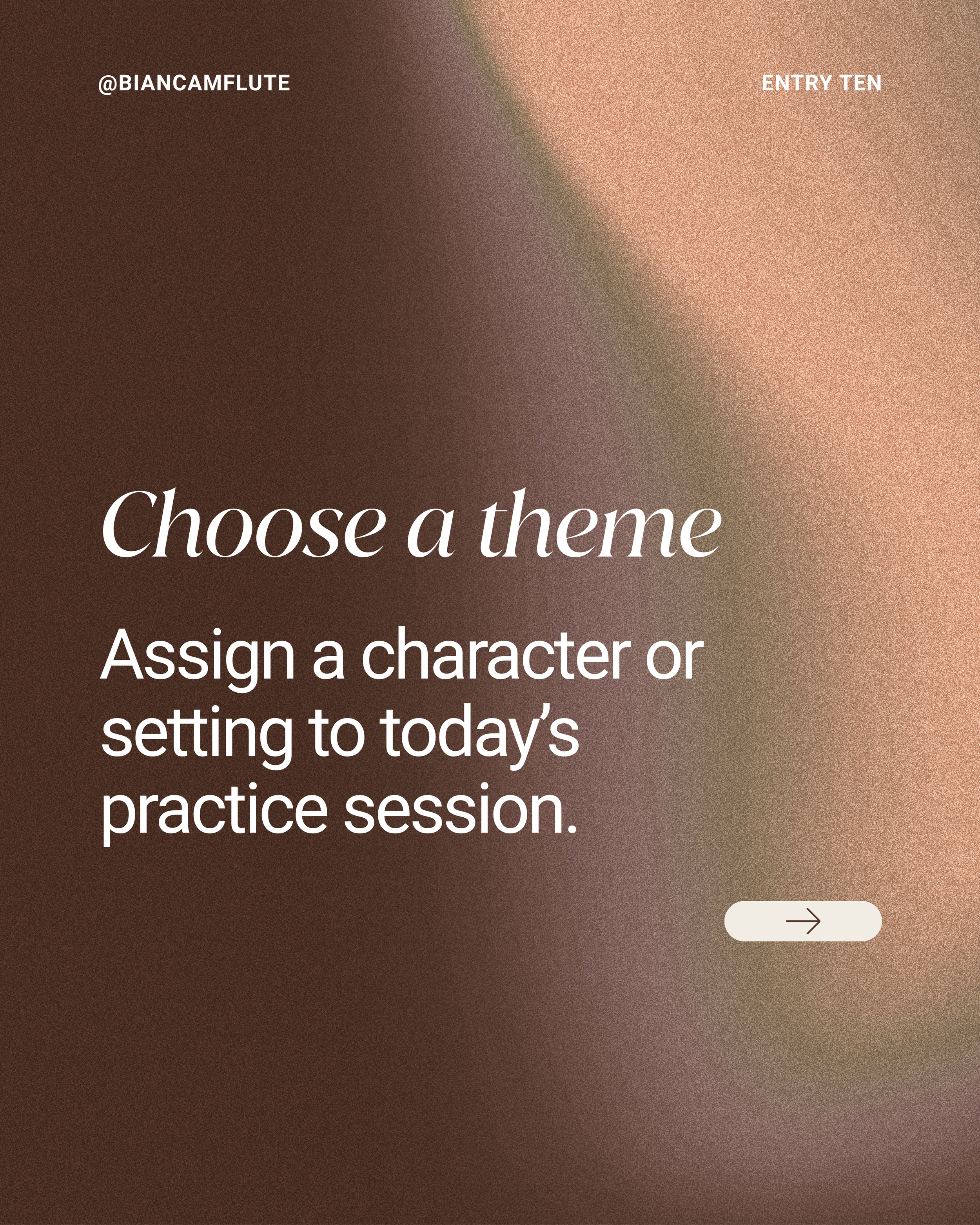
Give your practice session a theme or a character.
Choose a specific persona or theme that you would like to embody for today. Start with choosing a word like: edgy, soft, passionate, powerful. Or you can decide on a character - like an opera diva or a medieval court musician. This might feel silly, but think about it; practicing can often bring out the inner critic above all else - a voice that stops you at every mistake you make. A character might commit to those mistakes, and could help keep you focused on communicating an actual story rather than just getting it right.
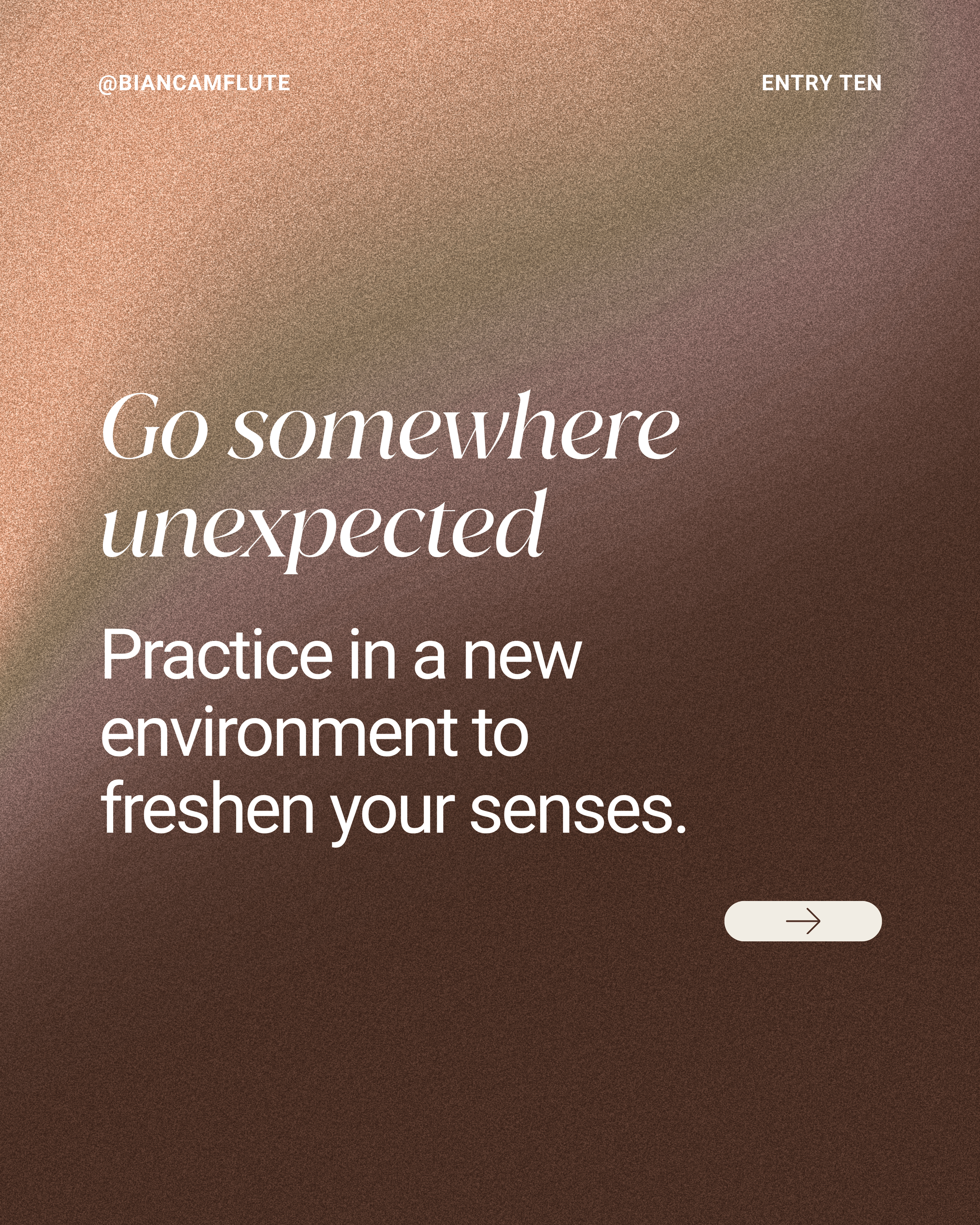
Practice somewhere unexpected.
Venture out of your usual spot. Play in your backyard, sketch in a bakery, write in a cafe, or practice in the bathroom. Somewhere that is maybe not the ideal acoustic or environment. Pay attention to how this new setting changes your performance. Things like the sounds, the lighting, or the energy around you could affect it.
Our brain likes to link skills to places - and the sooner I understood this, the better practicer I’ve become. Only working in a familiar space sets your brain to autopilot, and once you remove yourself from that space, it’s like you forgot how to do what you do best.
Think of when you’re preparing for an audition - if you’ve ever heard someone advise you to practice in various different rooms, there’s a reason. You more often have no idea what the audition room’s acoustics will sound like and that can throw even the best musicians off for even a second. You need to train your brain to adapt quicker and not let things, like your environment, affect how you perform.
Let chance decide.
Don’t know what to work on first? Grab a die or a deck of cards and let chance decide. Write each thing you need to work on, on a slip of paper and draw it from a jar. The whole point is to take the burden of deciding what you work on, and when, out of your hands.
Going back to auditioning, I’ve found this super helpful for my preparation. When I have a list of 15 orchestral excerpts and 4 solo work excerpts that I need to prepare, I often feel like: where do I even start? Instead, I decide that I will focus on only 4 excerpts for this session, and the order in which I work on them is decided by a random number generator on my computer. I set my timer and get to work.
This adds a little excitement, whether the good kind or the bad kind, because it can push you to work on the things that you typically avoid. Over time, your skills can develop more evenly instead of only within your comfort zone.
Create playful challenges and rewards.
Everyone loves a game - let’s be honest. And if you’re reading this, you are likely pretty competitive by nature. Who better to compete with than who you were yesterday?
Start throwing in different challenges with reward, such as: three clean run throughs wins you a sip of your coffee. At least…that’s what motivates me (and don’t worry, I always chase with water before playing my flute again)!
Start with something small like that, then gradually work up to something bigger, like: if I practice for 2 hours this morning then I will go to happy hour later. Maybe don’t start with something this big, though, because that’s easy to not commit to if you haven’t yet seen the value in how this strategy can improve your progress.
Make something silly on purpose.
Set aside a few minutes for deliberately non-traditional playing. Improvise over one of your favorite popular songs, write a poem about your sock drawer, or learn your favorite video game theme song. Don’t save it or share it if you don’t want to - there really are no rules with this.
Everything can’t feel so high stakes. Creatives can really thrive when their habits are looser and, since there’s no way to do anything wrong for these 10 minutes of your day, you could stumble into some fresh ideas, sounds, or styles. Use this time to feed into your serious work that follows.